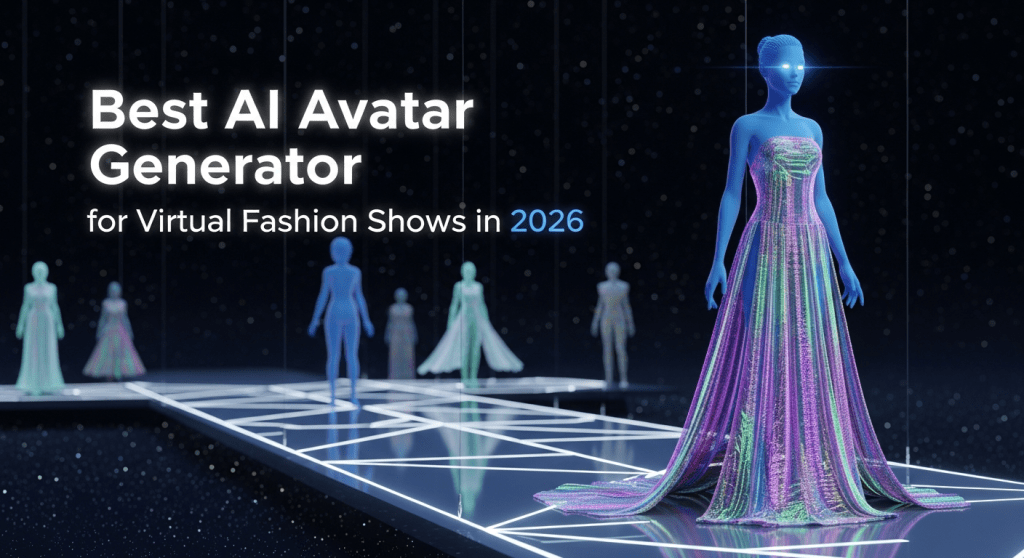
Artificial intelligence is transforming the fashion industry, and
AI avatar generators are now playing a major role in virtual fashion shows. Instead of traditional runway events with physical models, designers can showcase clothing collections using digital avatars that walk, pose, and display outfits in immersive virtual environments.
Virtual fashion shows allow brands to present their collections online, reach global audiences, and reduce production costs. AI-powered avatars can simulate realistic body movement, fabric physics, and runway animations, making digital fashion presentations more engaging and accessible.
In this article, we explore the best AI avatar generators for virtual fashion shows in 2026 , along with their features, benefits, and use cases.
What is an AI Avatar Generator for Virtual Fashion Shows?
An AI avatar generator for virtual fashion shows is a platform that creates digital fashion models capable of presenting clothing in virtual environments . These avatars can walk on virtual runways, pose for cameras, and display garments just like real models.
These systems typically combine several technologies:
- 3D avatar modeling
- AI animation and motion capture
- Garment simulation and fabric physics
- Virtual environment rendering
AI also helps automate garment design and avatar animation, enabling dynamic runway presentations and interactive fashion experiences.
Why Fashion Brands Are Using AI Avatar Generators
Lower Production Costs
Virtual fashion shows eliminate expenses related to travel, venues, stylists, and photography teams.
Global Audience Reach
Digital events can be streamed worldwide, allowing fashion brands to connect with audiences everywhere.
Faster Design Visualization
Designers can showcase clothing digitally before physically producing garments.
Sustainable Fashion
Virtual shows reduce fabric waste, shipping, and environmental impact.
Flexible Presentation Formats
Brands can create immersive runway environments, metaverse shows, or digital lookbooks.
Key Features to Look for in an AI Avatar Generator
Realistic 3D Avatars
High-quality platforms create avatars with natural body proportions and lifelike movements.
Garment Simulation
Clothing should move naturally on the avatar using realistic fabric physics.
Customizable Models
Brands should be able to customize body types, skin tones, faces, and hairstyles.
Virtual Runway Integration
Some tools support virtual runways, metaverse environments, or digital showrooms.
High-Resolution Rendering
Professional fashion presentations require high-quality visuals.
Best AI Avatar Generators for Virtual Fashion Shows in 2026
AI fashion technology is evolving quickly, and several platforms now provide tools for creating digital fashion models and virtual runway presentations.
Zoice
Zoice
Zoice is a powerful AI avatar and video generation platform that can be used to create digital presenters and hosts for virtual fashion events.
Fashion brands can use Zoice avatars to introduce collections, narrate fashion shows, and present clothing lines in promotional videos.
Key Features
- AI avatar generation with realistic facial animation
- Natural voiceovers and script-to-video creation
- Multilingual voice support
- Customizable avatar appearance
- Cloud-based video generation
Pricing
- Free Plan – $0/month (50 credits/day)
- Starter – $7.99/month (4K credits/month)
- Basic – $29.99/month (17K credits/month)
- Creator – $49.99/month (30K credits/month)
- Agency – $89.99/month (50K credits/month)
Best For
Fashion brands creating AI hosts or presenters for digital runway events .
Style3D AI
Style3D AI is a powerful digital fashion platform used for designing garments and showcasing them on animated avatars.
The platform includes tools for sketch-to-3D conversion, virtual photoshoots, and garment simulation, making it ideal for digital fashion presentations.
Key Features
- 3D garment simulation
- Digital avatar models
- Virtual runway and photoshoot tools
- Fashion design visualization
Best For
Fashion designers creating virtual clothing collections and digital runway shows .
DeepMotion
DeepMotion focuses on AI-driven motion capture and animation technology. It allows avatars to move realistically with natural body motion.
This makes it especially useful for creating lifelike runway walks for digital fashion models.
Key Features
- AI motion capture technology
- Realistic avatar animation
- Runway walking and pose simulation
- 3D character animation tools
Best For
Animating digital fashion models in virtual fashion shows.
Browzwear
Browzwear is a digital apparel design platform used by many fashion brands to visualize garments before production.
The software allows designers to create accurate 3D garments and display them on digital models.
Key Features
- Digital garment design and simulation
- Virtual fashion models
- 3D clothing visualization
- Production workflow integration
Best For
Fashion companies developing digital garment prototypes and virtual showrooms .
Uwear AI
Uwear AI helps brands generate digital fashion models wearing clothing from product images.
This tool allows companies to create marketing visuals and virtual model photos quickly without traditional photoshoots.
Key Features
- AI fashion model generation
- Product image to model visualization
- Digital clothing presentation
- Ecommerce marketing visuals
Best For
Ecommerce brands showcasing clothing on digital models.
CLO 3D
CLO 3D is one of the most widely used 3D fashion design tools for creating realistic garments and digital fashion models.
The platform uses advanced simulation technology to create highly detailed clothing visuals and fabric behavior.
Key Features
- Realistic garment simulation
- 3D avatar visualization
- Fashion design tools
- High-quality rendering
Best For
Professional designers producing detailed digital fashion collections.
How to Create a Virtual Fashion Show with AI Avatars
Step 1: Design the Digital Clothing
Create garments using digital fashion design tools or upload clothing designs.
Step 2: Generate AI Fashion Models
Use avatar generators to create realistic digital fashion models.
Step 3: Animate the Runway Walk
Add motion and poses so avatars can walk naturally on the runway.
Step 4: Build the Virtual Runway Environment
Create a digital stage using lighting, 3D environments, and visual effects.
Step 5: Launch the Virtual Fashion Show
Stream the show online or present it in a metaverse environment.
Tips for Creating Successful AI Virtual Fashion Shows
Use Diverse Avatars
Represent different body types and identities.
Focus on Realistic Clothing Movement
Ensure fabric simulation accurately reflects garment behavior.
Create Immersive Environments
Use lighting, music, and stage effects to enhance the experience.
Combine Fashion with Storytelling
Narratives help keep audiences engaged and strengthen brand identity.
Future of AI Avatars in Fashion Shows
AI avatars are expected to play a major role in the future of fashion.
Metaverse Fashion Events
Brands may host fashion shows inside virtual worlds.
Personalized Fashion Experiences
Customers may see clothing on avatars that match their own body type.
Hybrid Fashion Shows
Future events may combine real models with digital avatars.
Digital Fashion Economy
Digital clothing and virtual fashion items may become a major industry.
Conclusion
AI avatar generators are reshaping how fashion collections are presented. Virtual fashion shows allow designers to showcase clothing in innovative ways while reducing production costs and environmental impact.
Platforms like Zoice, Style3D AI, DeepMotion, Browzwear, Uwear AI, and CLO 3D provide powerful tools for creating digital fashion models and immersive runway experiences.
As AI technology continues to evolve, virtual fashion shows will become an increasingly important part of the global fashion industry.
FAQs
What is a virtual fashion show?
A virtual fashion show is a digital event where clothing collections are presented using digital avatars or AI models instead of physical runway models.
Can AI avatars walk a runway?
Yes. AI animation and motion capture technology allow avatars to walk, pose, and display clothing realistically.
Are real fashion brands using AI models?
Yes. Many fashion companies are experimenting with digital models to reduce production costs and create innovative campaigns.
Do AI avatar tools support garment simulation?
Some platforms include advanced garment physics to simulate realistic clothing movement.
Which AI avatar generator is best for virtual fashion shows?
Zoice, Style3D AI, DeepMotion, Browzwear, and CLO 3D are among the best tools for creating virtual fashion shows in 2026.
 AIToolsHub
Leave a comment