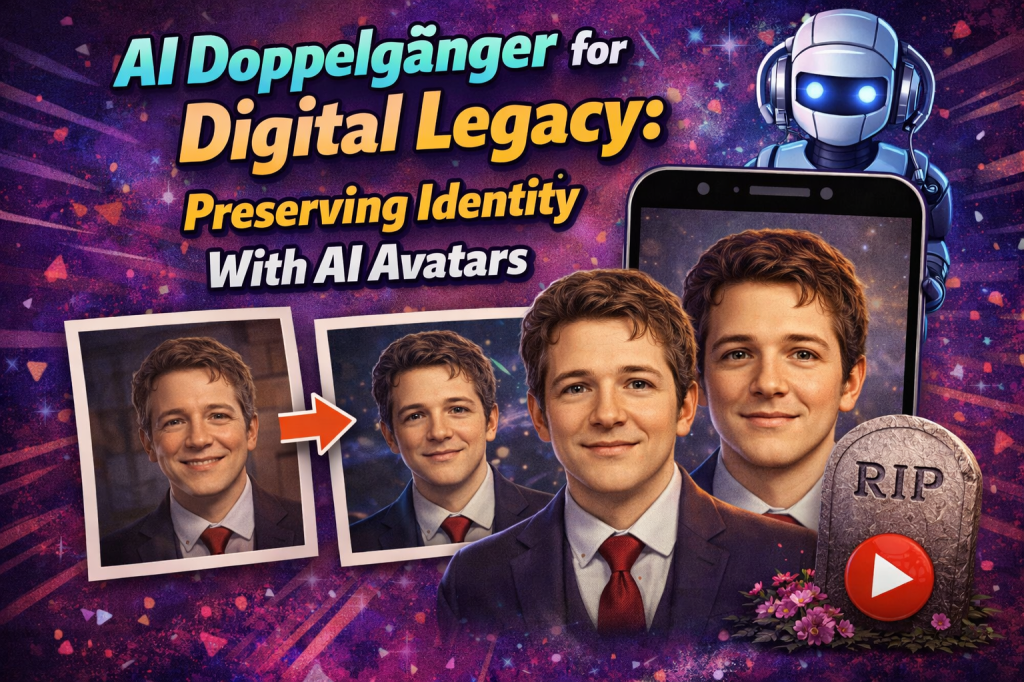
Artificial intelligence has made it possible to create digital versions of people known as AI doppelgängers. These digital avatars can replicate a person’s appearance, voice, and communication style using advanced AI technologies. By combining facial animation, voice cloning, and script-to-video generation, AI platforms allow individuals to create virtual presenters that represent them in videos or digital messages.
The concept of digital legacy is becoming increasingly important in the digital age. People want to preserve their stories, knowledge, and memories for future generations. AI avatars can help achieve this by allowing individuals to record messages, share experiences, or create educational content that continues to exist online. In this article, we explore what AI doppelgängers are, how they support digital legacy creation, and the best AI tools that can help create these digital avatars.
What Is an AI Doppelgänger?
An AI doppelgänger is a digital avatar designed to represent a real person. It is created using artificial intelligence that analyzes images, voice recordings, and text inputs to generate a virtual version of the individual.
These avatars can appear in videos, deliver messages, and even present information. AI systems replicate facial movements, lip synchronization, and voice patterns to create the illusion that the digital avatar is speaking naturally.
AI doppelgängers are commonly created using several technologies:
- AI avatar generation
- Voice cloning or AI voice synthesis
- Facial animation and lip synchronization
- Script-to-video generation
When combined, these technologies create a digital character capable of communicating messages even when the real person is not present.
What Is a Digital Legacy?
A digital legacy refers to the information, memories, and digital content that a person leaves behind online. This may include photos, videos, stories, social media content, and recorded messages.
With the help of AI technology, digital legacy can be preserved in a more interactive way. Instead of only storing images or written stories, AI avatars can present messages and communicate ideas in a video format.
AI doppelgängers allow individuals to preserve their voice and personality in digital form. For example, educators can record lessons that continue to be shared, storytellers can preserve narratives, and families can save personal messages for future generations.
Why People Create AI Doppelgängers
AI doppelgängers provide several benefits for individuals and organizations.
Preserving personal stories and memories
AI avatars can record stories, messages, or life experiences for future generations.
Digital presence for creators and influencers
Content creators can maintain an online presence through AI avatars.
Educational knowledge preservation
Experts can share lessons or knowledge that remain accessible long term.
Faceless content creation
Creators can generate videos using avatars without recording themselves repeatedly.
Multilingual communication
AI avatars can speak multiple languages, allowing messages to reach global audiences.
These capabilities make AI doppelgängers useful for storytelling, education, and digital heritage preservation.
Key Features to Look for in AI Doppelgänger Platforms
When selecting an AI platform to create a digital twin, several features are important.
Avatar realism
The digital avatar should resemble the individual closely.
Voice cloning technology
The AI should replicate the person’s voice naturally.
Script-to-video generation
Users should be able to generate videos from written text.
Lip synchronization
Speech should match mouth movements accurately.
Customization options
Users should be able to adjust gestures, backgrounds, and presentation styles.
Secure data storage
Personal images and voice data should be stored securely.
Best AI Tools to Create an AI Doppelgänger
Several AI platforms allow users to create digital avatars that can represent them in videos.
Zoice
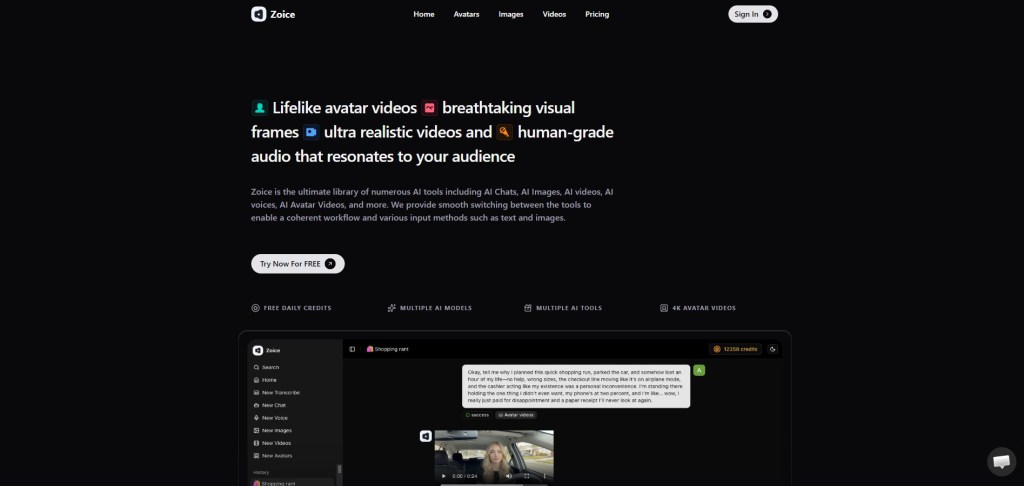
Zoice is an AI avatar video generation platform designed to help users create realistic digital presenters. The platform allows individuals to convert images into animated avatars that can deliver messages using AI voice narration and lip synchronization.
Zoice is useful for creating digital representations of individuals that can appear in videos or presentations. Users can upload images, add scripts, and generate videos where the avatar speaks naturally. This makes Zoice suitable for digital legacy videos, storytelling, and educational content.
Key Features
Realistic AI Avatars
Create digital presenters with natural facial expressions.
Image to Avatar
Convert photos into talking avatars.
Advanced Lip Sync
Synchronize voice narration with mouth movements.
Add Prompt for Hand Gesture
Control avatar gestures for expressive presentations.
Voice Cloning
Maintain consistent voice narration across videos.
100+ Language Support
Generate videos for global audiences.
High Resolution and High Quality Output
Export videos suitable for professional use.
Supports Customizable Backgrounds
Adapt backgrounds to match storytelling or presentation themes.
Zoice Pricing
Free Plan – $0/month (50 credits per day)
Starter Plan – $7.99/month
Basic Plan – $29.99/month
Creator Plan – $49.99/month
Agency Plan – $89.99/month
Zoice is particularly useful for individuals who want to create digital avatars for storytelling, educational content, or digital legacy projects.
HeyGen
HeyGen is an AI avatar video platform that allows users to create personalized digital presenters. The platform supports script-to-video generation and avatar customization.
Users can generate videos where digital avatars deliver scripts with voice narration and facial animation. HeyGen is commonly used for marketing videos, presentations, and online content creation.
Synthesia
Synthesia is widely used by businesses and organizations to create AI avatar videos. The platform provides a library of digital presenters and supports video generation in multiple languages.
It is commonly used for training videos, corporate presentations, and educational content.
D-ID
D-ID specializes in talking portrait technology that converts images into animated avatars. Users can upload a photo and generate a video where the portrait appears to speak.
This technology is often used for storytelling videos and digital presentations.
Colossyan AI
Colossyan AI is designed primarily for structured video presentations. The platform allows users to convert scripts or documents into videos where AI avatars present the information.
It is often used for educational content and corporate training materials.
Comparison of AI Doppelgänger Platforms
| Tool | Best For | Key Feature |
| Zoice | Custom avatar videos | Image-to-avatar conversion |
| HeyGen | Personal avatar creation | Script-to-video generation |
| Synthesia | Professional video production | AI avatar library |
| D-ID | Talking portrait videos | Image animation |
| Colossyan AI | Educational presentations | AI video generation |
Each platform provides different capabilities depending on the type of digital legacy content being created.
How to Create an AI Doppelgänger
Creating a digital avatar usually involves several simple steps.
Step 1 – Choose an AI avatar platform
Select a tool that supports avatar creation.
Step 2 – Upload images or video samples
The AI analyzes facial features to generate the avatar.
Step 3 – Train the AI with voice samples
Upload voice recordings or generate AI voice narration.
Step 4 – Customize the digital avatar
Adjust appearance, gestures, and backgrounds.
Step 5 – Generate digital legacy videos
Create videos where the avatar shares messages or knowledge.
Use Cases for AI Doppelgängers
AI doppelgängers can be used in several creative and practical ways.
- Personal storytelling and memory preservation
- Educational content creation
- Digital influencers and creators
- Virtual presenters for businesses
- Historical storytelling and documentaries
These applications allow individuals to preserve their voice, ideas, and experiences.
Future Trends in AI Digital Legacy Technology
AI digital legacy technology is evolving rapidly. Future systems may create highly realistic digital humans capable of real-time conversation and interaction.
AI avatars may also be integrated into virtual reality environments, allowing people to interact with digital versions of historical figures or loved ones.
These technologies could transform how people preserve and share their memories and knowledge.
Conclusion
AI doppelgängers represent a new way to preserve identity and knowledge in the digital world. By combining avatar generation, voice cloning, and AI video creation, individuals can create digital avatars that continue to communicate their stories and ideas.
Platforms such as Zoice, HeyGen, Synthesia, D-ID, and Colossyan AI provide powerful tools for creating these digital avatars. Among these options, Zoice stands out because it offers customizable avatars, multilingual support, and flexible pricing.
For individuals who want to preserve their voice, knowledge, or personal stories, AI doppelgängers provide an innovative solution for building a lasting digital legacy.
FAQs
What is an AI doppelgänger?
An AI doppelgänger is a digital avatar created using artificial intelligence that represents a real person.
How can AI preserve a digital legacy?
AI avatars can record messages, stories, or knowledge and present them in video form for future audiences.
Which tools can create AI avatars of real people?
Popular tools include Zoice, HeyGen, Synthesia, D-ID, and Colossyan AI.
Can AI avatars replicate a person’s voice?
Yes, many AI platforms support voice cloning or AI voice synthesis.
Are AI digital twins secure?
Most AI platforms use data protection measures to store images and voice samples securely.
 AIToolsHub
Leave a comment