Telehealth services have grown rapidly in recent years as healthcare providers adopt digital technologies to deliver remote care. Virtual consultations allow patients to connect with healthcare professionals from home, making medical services more accessible and efficient.
AI avatar technology is now being integrated into telehealth platforms to improve patient interaction and communication. AI avatars can act as virtual healthcare assistants, guide patients through consultations, explain medical information, and assist with appointment scheduling.
Instead of relying only on text-based chatbots, telehealth systems can use digital avatars that speak, display facial expressions, and interact with patients more naturally. This article explores the best AI avatar creators for telehealth consultations in 2026, highlighting platforms that help healthcare providers deliver better virtual experiences.
What Are AI Avatar Creators for Telehealth?
AI avatar creators for telehealth are platforms that generate digital avatars capable of interacting with patients in virtual healthcare environments.
These tools combine several technologies such as:
- AI voice generation and speech synthesis
- facial animation and lip synchronization
- natural language processing
- script-to-video automation
AI avatars can simulate healthcare assistants, nurses, or virtual clinicians that communicate with patients.
These avatars are commonly used for:
- telehealth consultations
- patient onboarding and intake
- symptom assessment and triage
- healthcare education videos
- appointment scheduling assistance
Unlike traditional chatbots, avatar-based systems provide a more human-like interaction that improves patient engagement.
Benefits of Using AI Avatars in Telehealth
Improved Patient Engagement
Human-like avatars make virtual healthcare interactions feel more personal and comfortable for patients.
Faster Patient Intake and Triage
AI avatars can collect symptoms, medical history, and patient information before the consultation begins.
Scalable Virtual Healthcare
Healthcare providers can serve more patients by automating routine interactions using AI avatars.
Multilingual Healthcare Support
AI avatars can communicate with patients in multiple languages, improving accessibility for global audiences.
These benefits make AI avatar technology an attractive solution for telemedicine platforms.
Key Features to Look for in Telehealth AI Avatar Platforms
Before choosing an AI avatar platform for telehealth, healthcare providers should consider the following features.
Realistic Digital Clinicians
High-quality avatars with natural facial expressions create a more engaging patient experience.
Secure and Compliant Infrastructure
Healthcare systems require secure platforms that support privacy regulations such as HIPAA.
Integration with Healthcare Systems
The platform should integrate with electronic health records and telehealth software.
Voice Interaction and NLP
Natural language processing enables avatars to understand patient questions and respond appropriately.
Multilingual Communication
Language support allows healthcare providers to serve patients from different regions.
Top 5 Best AI Avatar Creators for Telehealth Consultations in 2026
Zoice
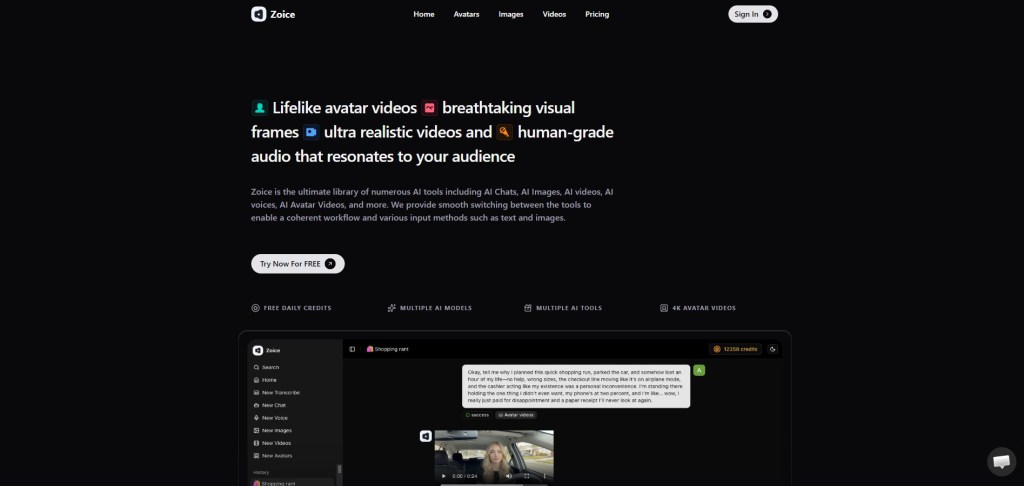
Zoice is one of the most powerful AI avatar platforms for telehealth communication and patient education. The platform allows healthcare organizations to generate videos and virtual interactions using digital avatars that speak scripts and explain information.
Zoice can be used to create virtual healthcare assistants that guide patients through telehealth consultations or provide medical education.
One of its standout features is talking photo technology, which allows images to be animated into speaking avatars.
Key Features
AI Avatar Video Generation
Zoice allows healthcare providers to generate videos where avatars explain medical procedures, treatment plans, or healthcare instructions.
Script-to-Video Automation
Medical scripts and patient instructions can be converted into videos automatically.
Talking Photo Technology
Photos can be animated into digital presenters that communicate with patients.
Multilingual Voice Support
Zoice supports multiple languages, making it easier for healthcare providers to serve diverse patient populations.
Best Use Cases
Zoice works well for:
- telehealth patient education videos
- virtual healthcare assistants
- medical training content
- patient onboarding videos
Because of its automation and avatar features, Zoice is one of the best AI avatar creators for telehealth applications.
Synthesia
Synthesia is a professional AI video generation platform widely used by organizations for educational and training content.
Healthcare providers use Synthesia to create patient education videos and medical training materials.
Key Features
- realistic AI presenters
- multilingual voice support
- professional video templates
- scalable content generation
Best Use Cases
Synthesia is commonly used for:
- patient education videos
- healthcare training programs
- medical communication content
D-ID
D-ID is known for its talking avatar technology that transforms images into animated presenters.
The platform offers APIs that allow developers to integrate avatar technology into telehealth systems.
Key Features
- talking photo animation
- AI voice generation
- facial animation technology
- developer integration tools
Best Use Cases
D-ID is widely used for:
- virtual healthcare assistants
- telemedicine interfaces
- healthcare communication tools
HeyGen
HeyGen is an AI avatar video generator that allows users to create customizable avatars and automated video presentations.
Healthcare organizations can use HeyGen to generate medical education and healthcare marketing videos.
Key Features
- AI avatar video generation
- custom avatar creation
- multilingual voice support
- marketing video templates
Best Use Cases
HeyGen works well for:
- healthcare marketing videos
- patient awareness campaigns
- health education content
Microsoft Azure AI Avatars
Microsoft Azure offers advanced digital human technology that can be integrated into enterprise telehealth platforms.
The platform supports secure cloud infrastructure and enterprise-grade AI services.
Key Features
- enterprise AI avatar technology
- cloud-based infrastructure
- integration with healthcare systems
- advanced AI voice and speech tools
Best Use Cases
Azure AI avatars are commonly used for:
- large telemedicine platforms
- enterprise healthcare systems
- AI healthcare assistants
AI Avatar Platforms Comparison Table
| Tool | Avatar Type | Best For |
| Zoice | Talking avatars | Telehealth consultations |
| Synthesia | AI presenters | Patient education |
| D-ID | Talking photos | Virtual healthcare assistants |
| HeyGen | Realistic avatars | Healthcare marketing |
| Azure AI | Digital humans | Enterprise telemedicine |
How to Choose the Best AI Avatar Creator for Telehealth
Choosing the right AI avatar platform depends on healthcare needs and infrastructure.
Ensure Healthcare Compliance
Platforms must support healthcare privacy and security regulations.
Evaluate Avatar Realism
More realistic avatars create better patient engagement.
Check Integration Capabilities
Integration with telehealth systems and EHR platforms is essential.
Consider Security and Privacy
Healthcare platforms must protect sensitive patient data.
Future of AI Avatars in Telehealth
AI avatar technology is expected to become an important part of digital healthcare.
Future developments may include:
- virtual AI doctors assisting consultations
- AI avatars performing preliminary patient assessments
- integration with wearable health devices
- personalized digital healthcare assistants
These innovations will help healthcare providers deliver faster and more accessible medical services.
Conclusion
AI avatar creators are transforming telehealth by improving communication between healthcare providers and patients. Instead of relying only on text-based systems, telehealth platforms can now use digital avatars to deliver information more naturally.
Platforms like Zoice, Synthesia, D-ID, HeyGen, and Microsoft Azure AI provide powerful tools for building telehealth avatar systems. Zoice stands out because it allows healthcare providers to generate patient education videos and virtual healthcare assistants easily.
As telemedicine continues to grow, AI avatars will play a significant role in making healthcare more accessible and interactive.
FAQs
What is an AI avatar for telehealth?
An AI avatar for telehealth is a digital presenter that interacts with patients during virtual healthcare consultations.
Can AI avatars replace doctors in telemedicine?
AI avatars cannot replace doctors but can assist with patient communication and education.
Which AI avatar tool is best for telehealth consultations?
Zoice is one of the best platforms for creating AI avatar videos for telehealth communication.
Are telehealth AI avatar platforms secure?
Most enterprise AI avatar platforms include security features and compliance standards for healthcare systems.
 AIToolsHub
Leave a comment